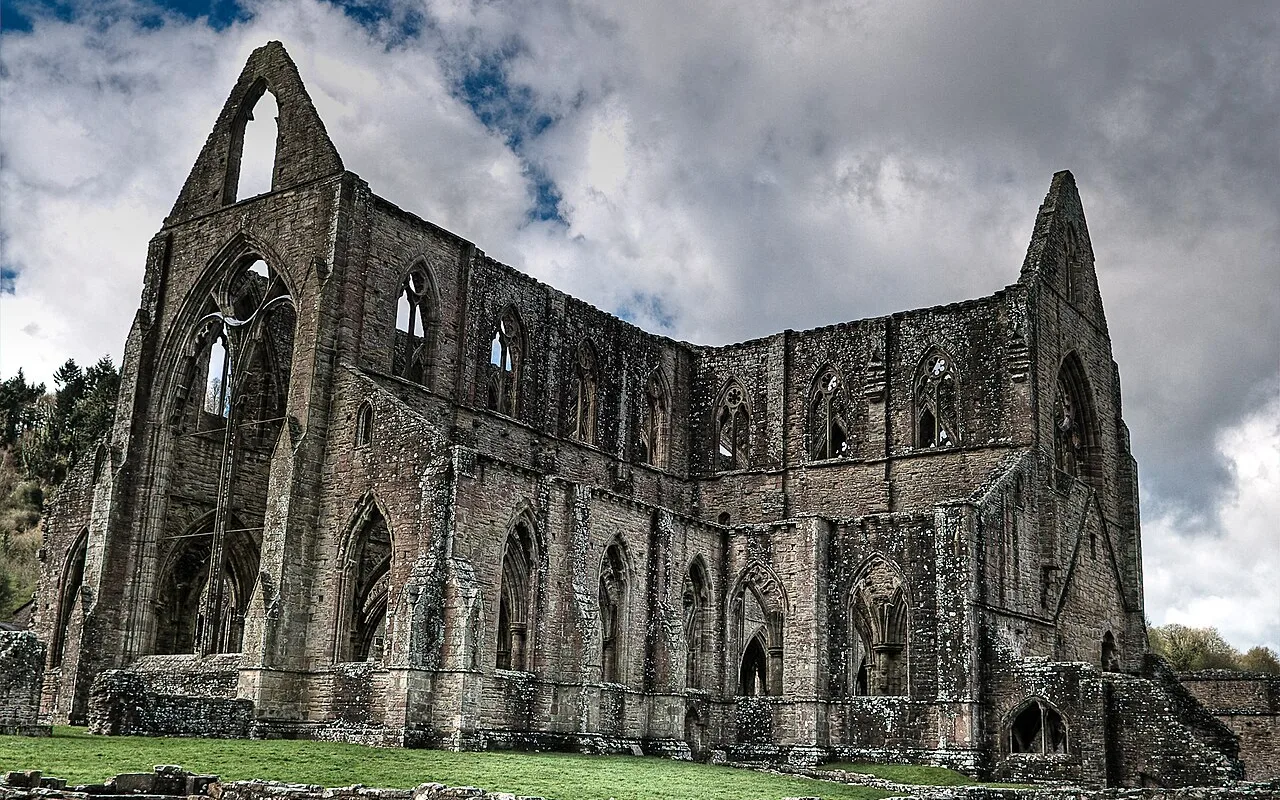
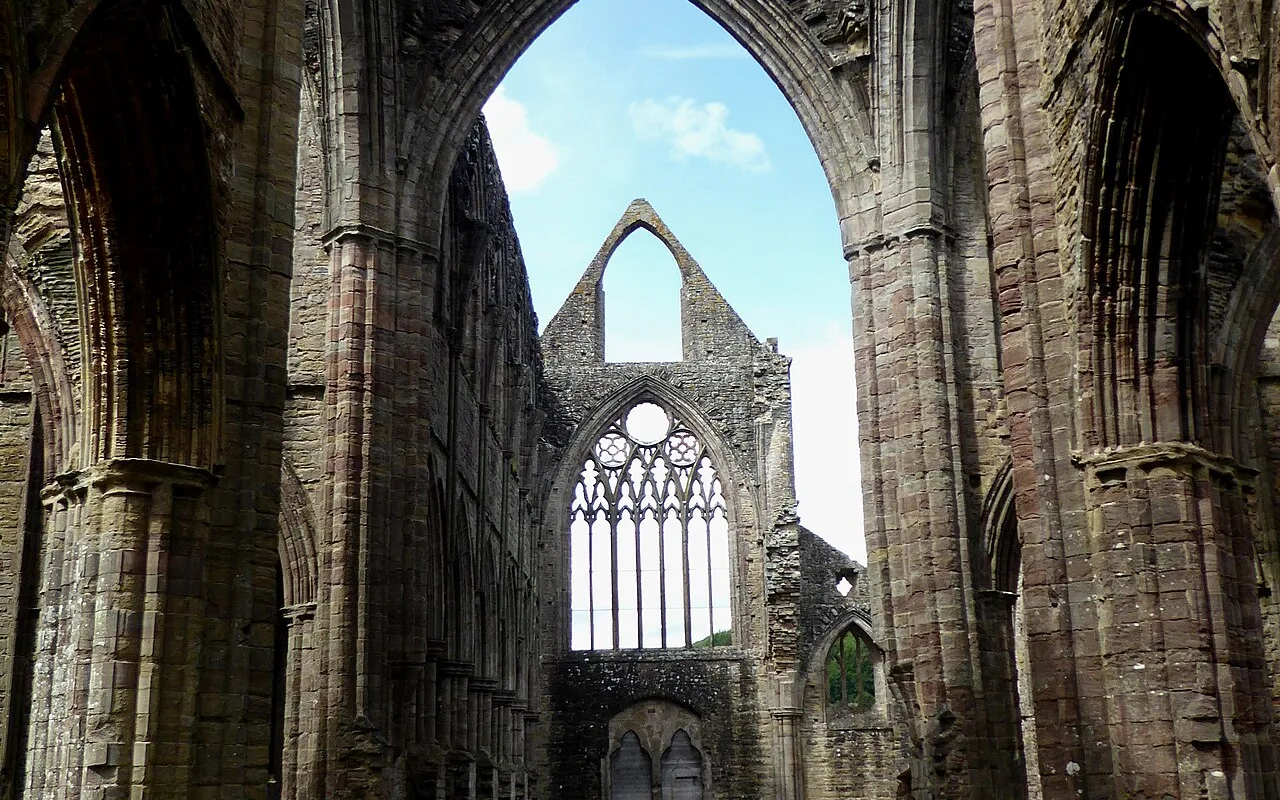
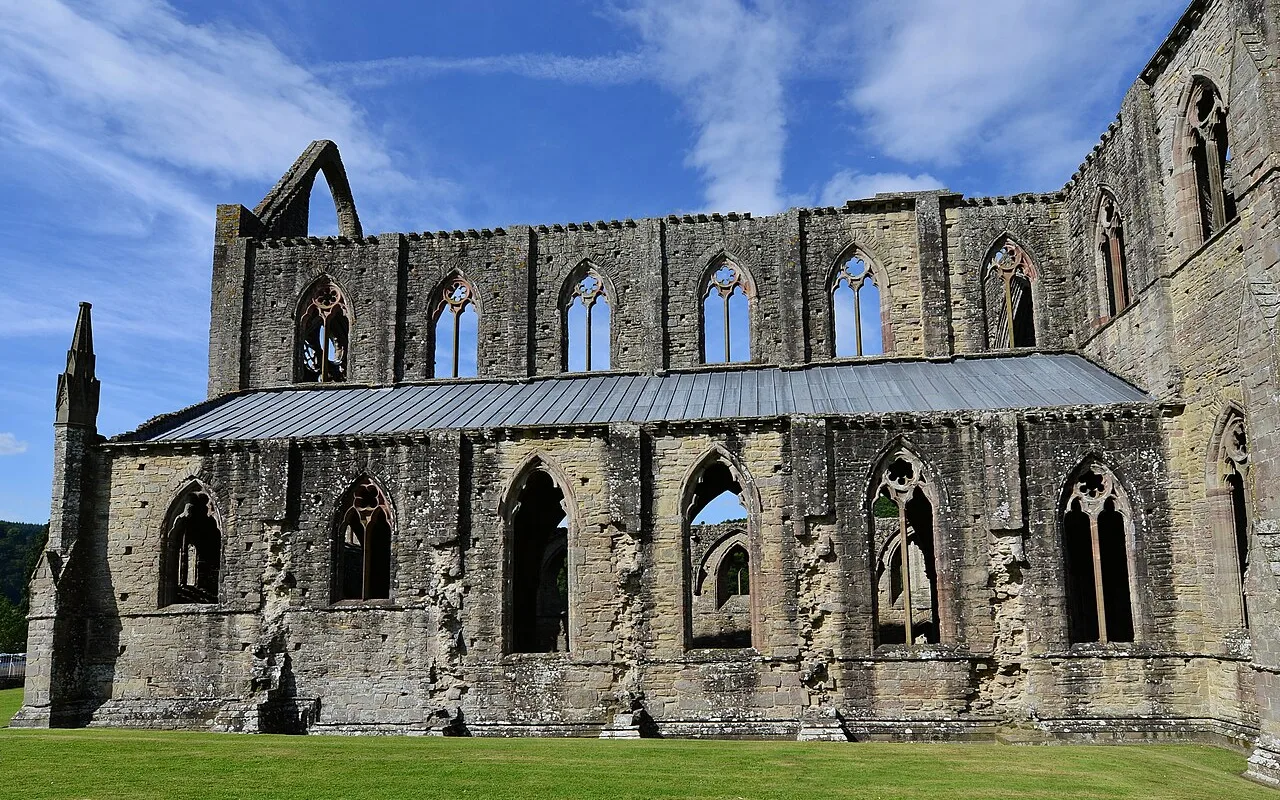
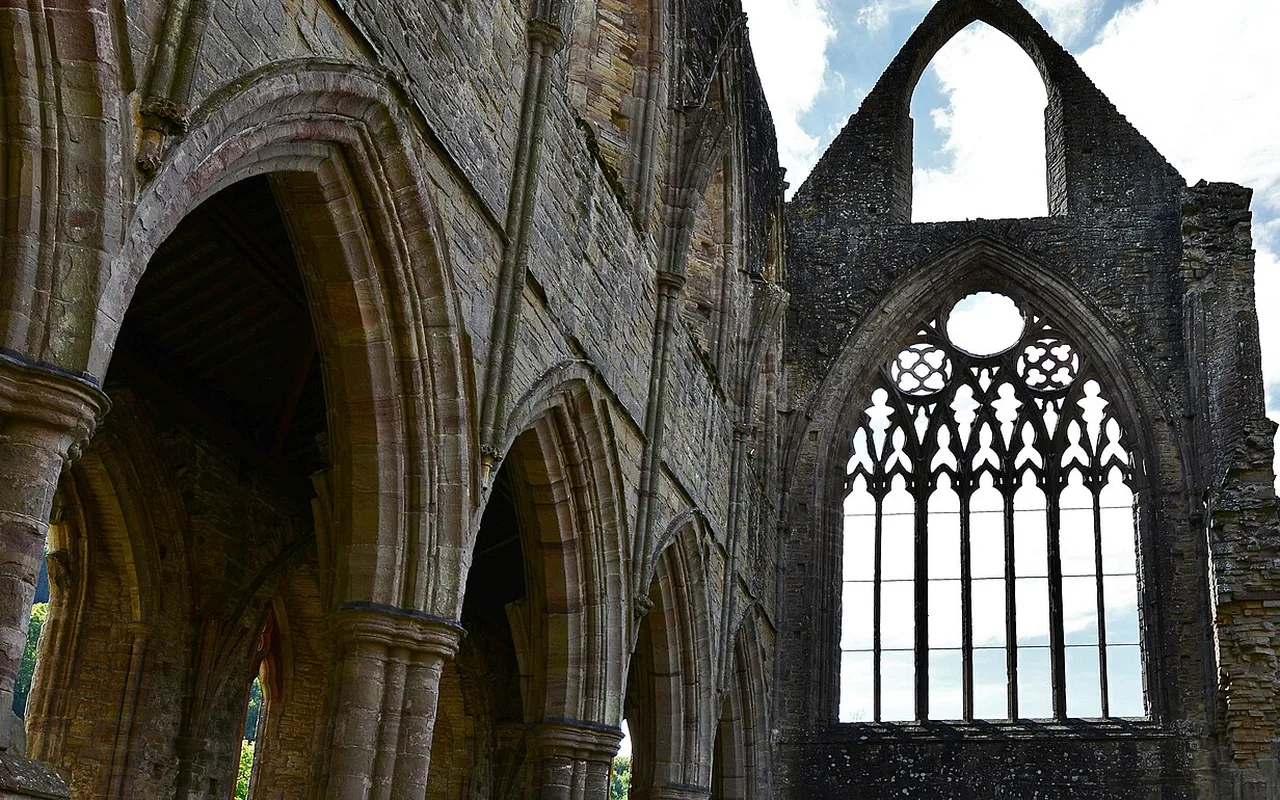
The roofless Gothic ruins of Tintern Abbey with soaring empty window tracery open to the sky, on the banks of the River Wye, Wales

Stand inside the roofless glory of Tintern Abbey

Empty Gothic window tracery open to the Welsh sky, a great church raised by Cistercian monks in 1269, and the ruin that moved Wordsworth to verse and Turner to paint — Tintern Abbey has stood above the River Wye since 1131. Few ruins in Britain feel this quietly overwhelming.

See ticket options
  • 1131 Founded by Cistercian monks on the banks of the Wye
  • Cistercian Wales's first Cistercian abbey, Britain's second
  • 1798 The valley that inspired Wordsworth's most famous poem
  • Roofless Open to the sky since the Dissolution of 1536

Choose your ticket

Junior / Student admission

One junior (ages 5–17) or student, with valid ID · full access, valid all day on your chosen date

€13

  • Date-specific admission to the great church, cloister and monastic ruins
  • Access to the full abbey precinct and riverside grounds
  • For ages 5 to 17, or students with valid ID — children under 5 enter free
  • Booking handled in your own language
Reserve junior ticket

Senior admission

One senior, aged 65 and over, with valid ID

€17

  • Date-specific admission to the great church, cloister and monastic ruins
  • Access to the full abbey precinct and riverside grounds
  • For visitors aged 65 and over — bring valid ID for the gate
  • Booking handled in your own language
Reserve senior ticket

Family ticket

2 adults + up to 3 children aged 5–17 · full access, valid all day on your chosen date

€61

  • Date-specific admission for 2 adults and up to 3 children aged 5–17
  • Access to the great church, cloister, monastic ruins and riverside grounds
  • The most economical way for families to visit together
  • Booking handled in your own language
Reserve family ticket
  • Book in your languageYour currency, final price.
  • No time slot to plan aroundDate-specific admission, valid all day.
  • Ready before you flyMobile ticket, ready in your inbox.
  • 24/7 human supportReal people, instant answers — any hour, any time zone.
4.7 from 34 verified travellers
Sarah H.
Bristol, England
“Standing under that empty window tracery with nothing but sky behind it is one of those moments that stops you in your tracks — photos really don't prepare you for the scale. Booking the date-specific ticket meant we could just show up when it suited our Wye Valley drive.”
May 2026
Mark T.
Melbourne, Australia
“We combined it with a walk along the river and the kids had a great time running around the ruined nave — surprisingly good for a family day out. Ticket arrived within minutes of booking, no fuss at all.”
April 2026
Anke B.
Cologne, Germany
“Als jemand, der viele europäische Klosterruinen gesehen hat, war das eine der eindrucksvollsten — die Proportionen der Kirche sind einfach überwältigend. Die Buchung war unkompliziert und die Bestätigung kam sofort.”
June 2026

5-minute audio guide

Your 5-minute Tintern Abbey pre-visit briefing

A short, calm narrative — what this abbey was, why Henry VIII's Dissolution left it roofless, what to look for in the great church's window tracery, and why Wordsworth and Turner couldn't stay away. Listen on the drive up the Wye Valley.

Included with your booking — your full guide arrives with your ticket.Get your guide
  • 1131 — Walter de Clare founds Tintern Abbey, the first Cistercian house in Wales and second in Britain
  • 1269–1301 — the great church is rebuilt in the Decorated Gothic style, with the soaring window tracery that survives today
  • 1536 — the abbey is surrendered during Henry VIII's Dissolution of the Monasteries and stripped of its roof and fittings
  • 1780s onward — organised boat tours up the Wye turn the ruin into one of Britain's first tourist attractions
  • 1798 — William Wordsworth's poem, and J.M.W. Turner's watercolours from the 1790s, cement Tintern's place in the Romantic imagination
  • Best timing: an early visit for the quietest light through the tracery, or late afternoon as the sun lowers over the west front

Recorded for Tintern Abbey Tickets concierge. Free to download.

About Tintern Abbey

Tintern Abbey stands on the Welsh bank of the River Wye in Monmouthshire, close to the border with England. Founded on 9 May 1131 by Walter de Clare, it was the first Cistercian abbey in Wales and only the second in Britain, after Waverley. What visitors see today is largely the great church rebuilt between about 1269 and 1301 in the Decorated Gothic style — a building of soaring proportions in local Old Red Sandstone, roughly 228 feet long, with a west front and window tracery still regarded as one of the finest achievements of British Gothic architecture. The abbey was surrendered to the Crown on 3 September 1536 during Henry VIII's Dissolution of the Monasteries, and its roof and fittings were stripped soon after, leaving the shell that has stood open to the sky ever since.

That roofless emptiness is what turned Tintern from a stripped monastic ruin into one of the most celebrated images in British art and literature. William Wordsworth's 1798 poem, written after a walking tour of the Wye valley, fixed the abbey and its surrounding landscape in the English literary imagination, while J.M.W. Turner returned to sketch and paint its stonework and shifting light again and again in the 1790s — works now held by the Tate and the British Museum. Together they helped make Tintern one of the founding sites of the Picturesque and Romantic movements, drawing visitors up the Wye by boat from the 1780s onward in what became one of Britain's earliest organised tourist trails.

Today Tintern Abbey is cared for by Cadw, the Welsh Government's historic environment service, as a Grade I listed scheduled monument — not a UNESCO World Heritage Site, but one of the best-preserved great Cistercian church ruins anywhere in Britain. Essential conservation work to the church's weathered sandstone upper walls means some scaffolding may still be visible on parts of the structure; the abbey remains fully open throughout. We handle the ticketing so your date-specific admission is confirmed before you arrive — one less thing to plan once you're in the Wye Valley.

Practical information

Opening hours
1 March–30 June: 9:30am–5pm. 1 July–31 August: 9:30am–6pm. 1 September–31 October: 9:30am–5pm. 1 November–28 February: 10am–4pm. Last admission is 30 minutes before closing. Closed 24–26 December and 1 January.
Address
Tintern Abbey, Tintern, Monmouthshire, NP16 6SE, Wales, UK.
Getting there
Tintern village sits on the A466 in the Wye Valley, about 7km (4 miles) from Chepstow and within a scenic drive of Bristol and Cardiff. Bus route 69 (Chepstow–Monmouth) stops around 300 metres from the abbey. A pay-and-display car park with around 55 spaces, including 5 disabled spaces, sits beside the entrance.
Accessibility
The abbey precinct is largely flat and rated Level 1 (accessible) by Cadw, though the grass and stone surfaces can become slippery and uneven in wet weather. Disabled visitors are admitted free of charge and may bring one companion free — contact Cadw ahead of your visit if you have specific access needs.
Bag policy
There is no dedicated left-luggage facility on site, so it's best to travel light — the abbey grounds are outdoors and uncovered, and there is nowhere secure to store large bags or luggage.
Photography
Personal, non-commercial photography is welcome throughout the abbey ruins and grounds. Essential conservation work on the church's upper walls means some scaffolding may be visible in parts of the site while repairs continue.

About our service

Tintern Abbey Tickets is an independent concierge service that helps international visitors reserve and receive their admission ticket in English. We are not the abbey and we are not an official vendor — we obtain a genuine admission ticket on your behalf from the site's ticketing system, and our service fee is included in the price you see. If you prefer to buy directly, Cadw runs its own ticket desk at the abbey and its own online shop.

Frequently asked

Do I need to visit at a specific time?

No fixed time slot — your ticket is date-specific rather than timed, so it's valid any time during opening hours on the day you choose. Just arrive within opening hours on your selected date.

Is this a skip-the-line ticket?

Your admission is reserved and confirmed before you arrive, so you go straight in with your mobile ticket rather than queuing at the desk. There's no timed entry to coordinate — you choose the day, we handle the booking.

What's included in the ticket?

Full access to the great church, the cloister, the monastic ruins and the riverside abbey grounds. It's one ticket covering the whole site for the day.

How and when do I get my ticket?

We send your ticket to your email as a mobile ticket with a QR code once your booking is confirmed. There's nothing to print — show it on your phone at the entrance.

Is Tintern Abbey roofless? Will I be outdoors the whole visit?

Yes — the abbey has been open to the sky since its roof was stripped after the 1536 Dissolution. The entire visit is outdoors within the ruined walls, so dress for the weather and bring a coat or umbrella if rain is forecast.

What happens if it rains?

The abbey stays open in all but the most severe weather, since it's a roofless ruin with no indoor galleries to shelter in. Bring suitable clothing — a wet-weather visit still shows the tracery and stonework beautifully, and many visitors find the atmosphere even more striking in rain or mist.

Is there scaffolding on the abbey at the moment?

Essential repairs to the weathered sandstone on the church's upper walls mean some scaffolding may be visible on parts of the structure. The abbey remains fully open to visitors throughout this conservation work.

How do I get to Tintern Abbey from Chepstow, Bristol or Cardiff?

Chepstow is the closest town, about 7km away on the A466, with bus route 69 stopping near the abbey. From Bristol it's roughly a 45-minute drive over the Severn Bridge; from Cardiff, around an hour via the M4 and A466 through the Wye Valley.

How long does a visit take?

Most visitors spend one to two hours exploring the great church, cloister and monastic ruins — longer if you linger over the window tracery or walk the wider abbey grounds along the Wye. There's no fixed schedule, so you set the pace.

Is Tintern Abbey good for children?

Yes. The scale of the ruined church, the open grassy ruins to explore and the riverside setting tend to appeal to children, and the site's flat terrain makes it easy to navigate as a family. It can be windy and exposed, so dress accordingly.

Who qualifies for the junior or student price?

The junior rate covers ages 5 to 17; students with valid ID also qualify. Children under 5 enter free. Bring ID or proof of status to the gate.

Who qualifies for the senior price?

Visitors aged 65 and over qualify for the senior rate — bring valid ID to the gate.

What does the family ticket include?

One family ticket covers 2 adults and up to 3 children aged 5–17, with full access to the whole abbey site — it's the most economical way for a family to visit together rather than buying separate tickets.

Is Tintern Abbey accessible for visitors with limited mobility?

The abbey precinct is largely flat and rated as accessible, though grass and stone surfaces can be slippery when wet. Disabled visitors are admitted free with one companion also free — contact the site ahead of your visit if you have specific access needs.

Can I take photos inside the abbey?

Yes, personal photography is welcome throughout the ruins and grounds — the empty window tracery against the sky is one of the most photographed views in Wales.

Is Tintern Abbey open on public holidays?

The abbey is closed on 24–26 December and 1 January, and runs shorter hours in winter (10am–4pm, 1 November–28 February). We'll flag it if a closure affects the date you've chosen.

Why did Wordsworth and Turner make Tintern Abbey famous?

William Wordsworth's 1798 poem, written after a walking tour of the Wye valley near the abbey, and J.M.W. Turner's watercolour studies of its stonework from the 1790s helped establish Tintern as one of the founding sites of the Romantic and Picturesque movements, drawing organised boat tours up the Wye from the 1780s onward.

Can I change my mind after booking?

Because admission is date-specific, please choose your travel date with care when you book. All sales are final once confirmed; the only exception is a full refund if the operator cancels your visit. See our terms for the full policy.

Are you the official abbey ticket office?

No. We're an independent concierge service for international visitors. We obtain a genuine admission ticket on your behalf and handle the booking in your own language. Our service fee is included in the price shown, and you can always buy directly from Cadw if you prefer.

What currency am I charged in?

The price you see is the price you pay — we show it in your local currency where we can and charge exactly that amount, with no surprise fees at checkout. Payment is by card on a secure page.